10 urban details to look out for in Europe
1) Space Invader Art
all across Europe
Chances are, you've already come across one of these tiny artworks somewhere in Europe. The street artist behind these pixelated works has been leaving his small mosaic tiles all over the world for the past ten years. You can find many of them in European cities such as Paris, Madrid, Antwerp, Brussels and Barcelona. Discover his complete world invasion on space-invaders.com.

Robert Katzki, Unsplash
2) Blue Plaques
United Kingdom
Look out for blue plaques scattered across the United Kingdom, with many to be found in England. These historic signs commemorate connections between buildings and significant people and events, such as the Beatles' final public performance that took place at the former Apple's Corp headquarters in London.

Geoff Henson (Flickr)
3) Stolpersteine
all across Europe
Stolpersteine means "stumbling stones" in German. Thousands of these brass cobblestones are embedded in streets in front of buildings throughout European cities, each bearing the name and life dates of a resident who was killed or persecuted by the Nazis. The German artist Gunter Demnig initiated the project in 1992 to provide a lasting remembrance of victims of National Socialism in Europe. The project continues to this day and can be found in 30 European countries.

Faina Peeters
4) Virgin Mary statues
all across Europe
From Spain’s hornacinas and Italy’s madonnelle to Germany’s Hausmadonnen and Antwerp’s beautiful Mariabeeldjes, these devotions to the Virgin Mary can be found across European cities. Many are unique and worth looking out for as you explore.
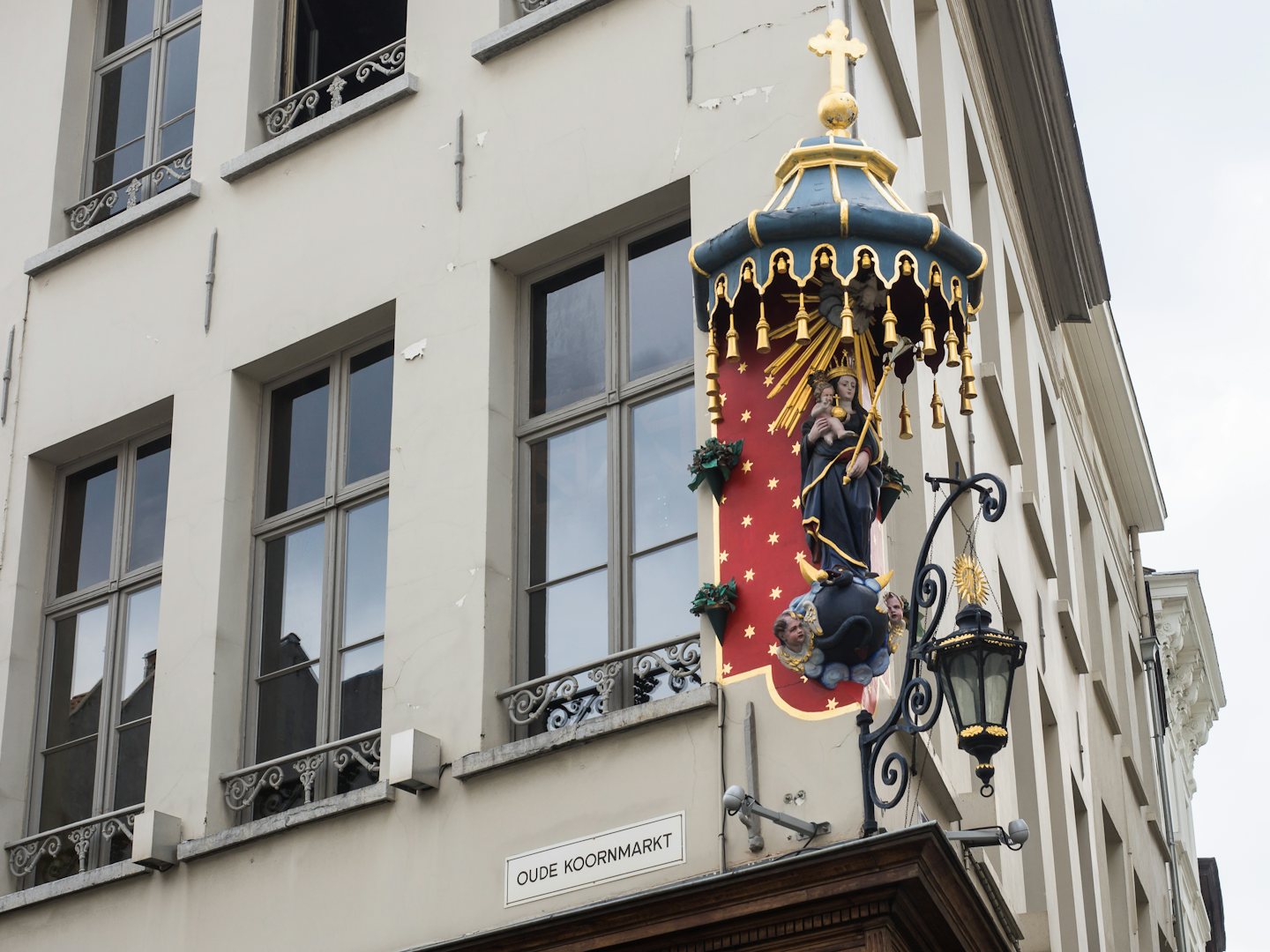
Virgin Mary statue in Antwerp, Roel Hendrickx
5) Camino de Santiago markings
all across Europe
Distinctive yellow arrows and scallop-shell markers guide pilgrims along routes leading to Santiago de Compostela, appearing on walls, pavements, signposts and buildings across Europe. Once you know what to look for, you may start spotting them in the most unexpected places.

Max Kukurudziak, Unsplash
6) Gable Stones
the Netherlands, particularly Amsterdam
In Dutch, they're called gevelstenen: carved or painted stone plaques set into the façades of buildings, often depicting a person, animal, occupation, religious scene, object, or house name. The example below is an 18th-century depiction of the fable of the fox and the crab. The fox wants to race the crab and thinks he will easily win, but the crab secretly holds on to his tail and wins the race. A story about pride preceding the fall. The gable was restored in 2009, giving the fox back his snout.

7) Drinking fountains
Often hidden in plain sight, many European cities like Rome, Madrid, Paris have free and clean drinking fountains scattered around. Some of these are more than 100 years old. In Rome, the public water fountains are called nasone or ‘big noses’, because of the curved shape of the iron spigot.

8) Distinctive street signs
Madrid, Porto, Lisbon, Brussels
Look out for unique street signs that reveal something about a city’s history, culture and character, like Madrid’s distinctive hand-painted ceramic signs in the Writer’s Quarter or Brussels' multilingual street signs. Another great example would be Porto and Lisbon's decorative azulejo street signs.

9) Bullet holes
Berlin, Madrid, Paris, Rome
Still visible in cities like Berlin, Madrid, Rome and elsewhere. These remnants of darker times serve as important reminders of the violence and upheaval that once took place across wartime Europe.

Faina Peeters
10) Cabmen's Shelters
London
Thirteen of these distinctive green sheds are scattered around London’s streets. They are survivals from a programme begun in 1875 to provide (horse-drawn) hansom cab drivers with shelter and food and drink. They still service taxi drivers today, providing a place for a cup of tea and a chat. The public can purchase good value refreshments from a hatch, but not enter the shelters. One can be found outside the V&A’s main entrance.

Sam Mellish
JOIN THE HIDDEN SECRETS SOCIETY
Unlock a world of hidden gems. Sign up for free and gain access to over 4,000 addresses on our website. Plus, enjoy a 10% discount on all print guides and ebooks. Start exploring today!
Already a member? Log in. |
New here? Sign up. |